I don’t know Hindi, or Marathi, but I learned a little, then took a bus somewhere they don’t speak it. I didn’t realize the bus wouldn’t go all the way to the station and wonder if the driver knew that before we left Mumbai or decided that later, en route. The man behind me was surprised as well, he didn’t know either and had previously assured us it would. I hadn’t realized that Darlene conjured the long forgotten religion of her childhood on government buses that lurched and screeched thru the hyperactive city streets. I was thankful the rickshaw driver got us almost to where we were going, he didn’t know where it was either.
I didn’t know which hotel I would stay in until after I landed at the airport. I didn’t know how long it would take to reach the hotel or that we’d meet two elderly Jewish men on a pilgrimage to the historic synagogue. They didn’t know where the taxi we agreed to share was, or how much I paid for it, and I had to chase after the older of the two when he pushed his suitcase, on a roller, out thru the noisy, pressing crowds and into the mayhem of the streets. I didn’t know if he was senile when I found him, bewildered and surrounded by taxi drivers, hawkers, and the curious. I hadn’t realized it was his birthday or that when he sat in the air conditioned car, his body cooled, and he became excessively talkative. I didn’t know this chatter would last for an hour and a half.
We spend our mornings not knowing if we’ll get a delicious Indian breakfast of idli, puttu, or my favorite dosha masala. We don’t know who we’ll meet, but always love it when someone laughs at our hindi and teaches us something new. I learned that the word for the spicy pickled fruit is achar, but I don’t know in which language and when I asked for it the next day I got chilies. At lunch, in a small cafe full of locals, we don’t know if the sambar or chutney’s will make us sick, but the dosa’s are so good, we go for it. We did not get sick and we don’t know when we will, but it seems reasonable that we will, at some point, get sick.
We do know that the Indian head bobble means yes. And no. And maybe. It also means I-don’t-understand-you-and-maybe-if-I’m-lucky-you’ll-smile-and-go-away as well as I-don’t-know-the-answer-to-your-question-but-will-never-admit-that-ever. I do realize that they know that I wont know until they’ve long gone and cannot be held accountable. I look at my small wooden carving of Ganesh, a revered Hindu deity with the head of an elephant and a sweet tooth. I ask him if he knows and he doesn’t answer, but of course he does. That’s the kind of sense it all makes. So I keep him close.
I do know how much I enjoy not knowing. I don’t have that luxury in the states, and though I don’t know there either, I’m suppose to know. And that, my friends, is stressful.
But here, deep in the not knowing, surrounded by questions and curiosities, curries and fruits, I recline and smile and bask in the mystery of it all, under the lazy heat of the coconut palms by the old basilica just down the road from where the ancient chinese fishing nets dip and rise, in and out of the sea, somewhere in India.

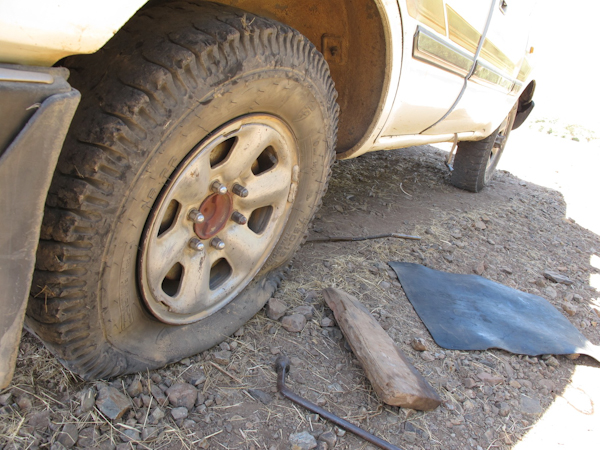
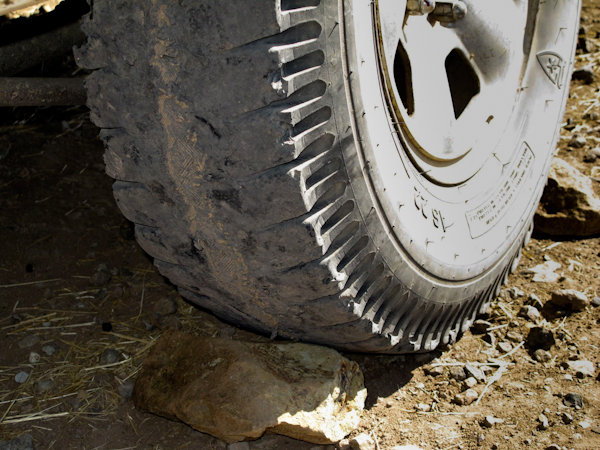
 The tire was flat when the car arrived. When I came out to greet him, Mulu was already under the car and surrounded by the neighborhood children, who were better behaved than I’d ever seen them.